Website and CMS
Launch a website that already understands bookings
Build rich pages, publish catalog-aware content, connect live booking actions, and review launch readiness without maintaining a separate CMS stack.
Website → Checkout → Operations → Reporting
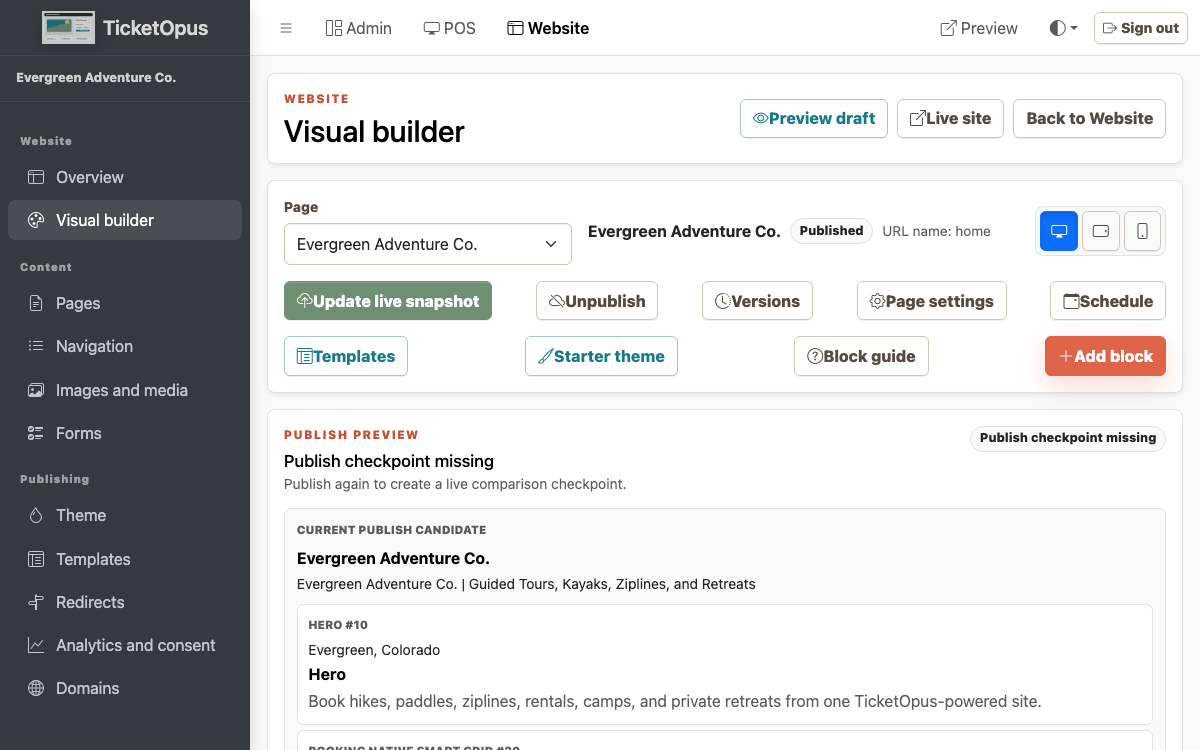
Content and commerce together
A new activity can move from catalog to a rich, bookable page without duplicate entry.
The workflow stays connected to the booking context, company boundary, and operational result.
- Booking-native page blocks
- Reusable page and section templates
- Media, navigation, forms, and redirects
Launch with evidence
Review the details that usually surface after launch.
The workflow stays connected to the booking context, company boundary, and operational result.
- SEO and structured content
- Accessibility and localization records
- Analytics, consent, and performance checks
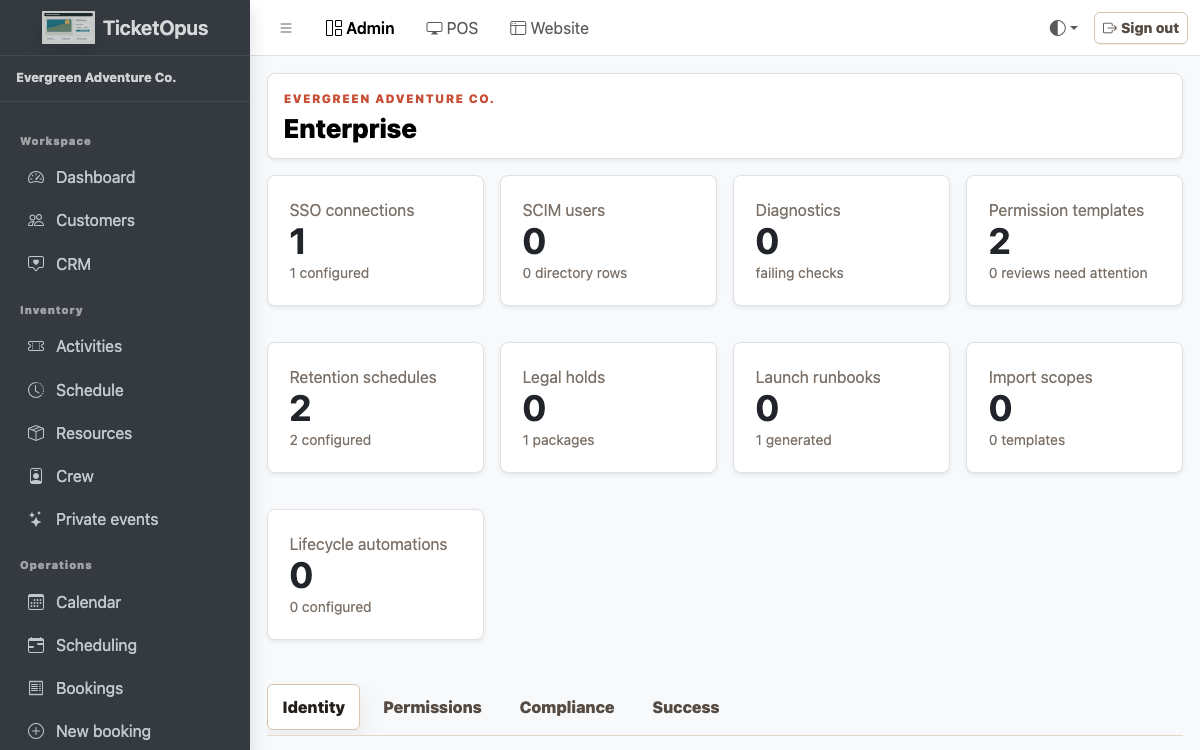
How the work moves
A controlled path from context to result.
Each step keeps responsibility, evidence, and the next action clear.
-
01
Connected step
Choose a starting theme
Start with the context that already exists.
-
02
Connected step
Connect the catalog
Configure the rules and responsibility.
-
03
Connected step
Review launch readiness
Run the workflow with the guest and team.
-
04
Connected step
Publish and improve
Review the result and improve the next cycle.
Questions before launch
Make the important boundaries explicit.
Can TicketOpus start with one workflow?
Yes. The platform is designed so an operator can begin with direct booking or another priority workflow and add connected capabilities as the operation matures.
Does TicketOpus support an existing website?
Yes. TicketOpus supports an embeddable booking path while also offering a booking-native hosted website and CMS direction.
How should we evaluate a migration?
Start with future bookings, catalog and schedules, customer records, payments and balances, integrations, domains, reporting, and the staff workflows that must work on launch day.
Are every provider and integration live today?
Integration pages distinguish implemented platform surfaces, provider-readiness controls, and future provider activation. A specific provider should be verified before it is included in a launch plan.