The experience business operating system
Run every booking. Own every guest. Grow every experience.
TicketOpus connects your website, checkout, schedules, staff, guests, payments, and reporting in one platform built for experience businesses.
Website → Checkout → Operations → Reporting
The outcome, not another tool
Make the business easier to buy from—and easier to run.
TicketOpus is built around the handoffs that decide whether a booking becomes a clean operation or another trail of duplicated work.
Grow direct revenue
Publish better offers, make availability easy to act on, and keep checkout connected to the source that earned the visit.
Run one operation
Coordinate schedules, staff, resources, guests, payments, and day-of work from the same booking context.
Earn the next booking
Make communication, arrival, self-service, reviews, and follow-up feel like one guest relationship.
One booking, one connected journey
The context moves forward with the guest.
Explore how the same record powers public discovery, payment-safe checkout, day-of operations, and trustworthy reporting.
The operating system
Deep enough for the work after “Book now.”
Each product area is useful on its own and stronger because it shares the booking, guest, company, and transaction context around it.
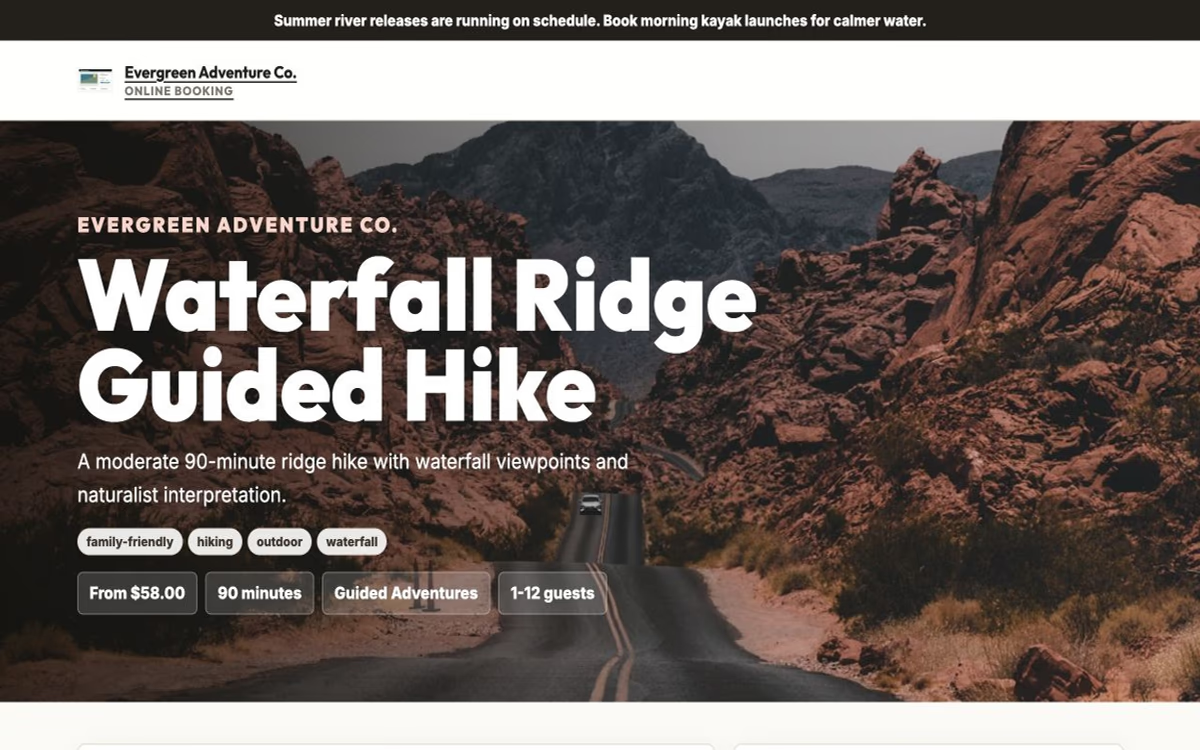
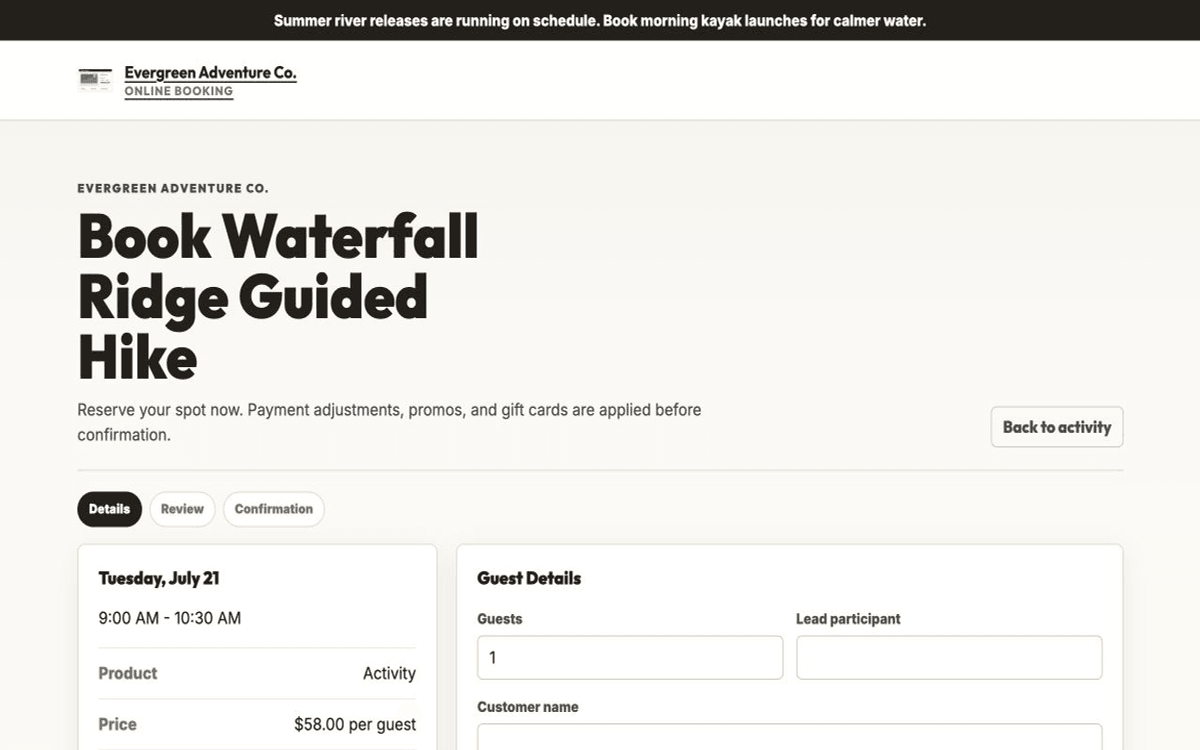
Website and booking
Build rich pages, show live availability, and move guests through a branded cart and secure checkout.
Explore workflow →
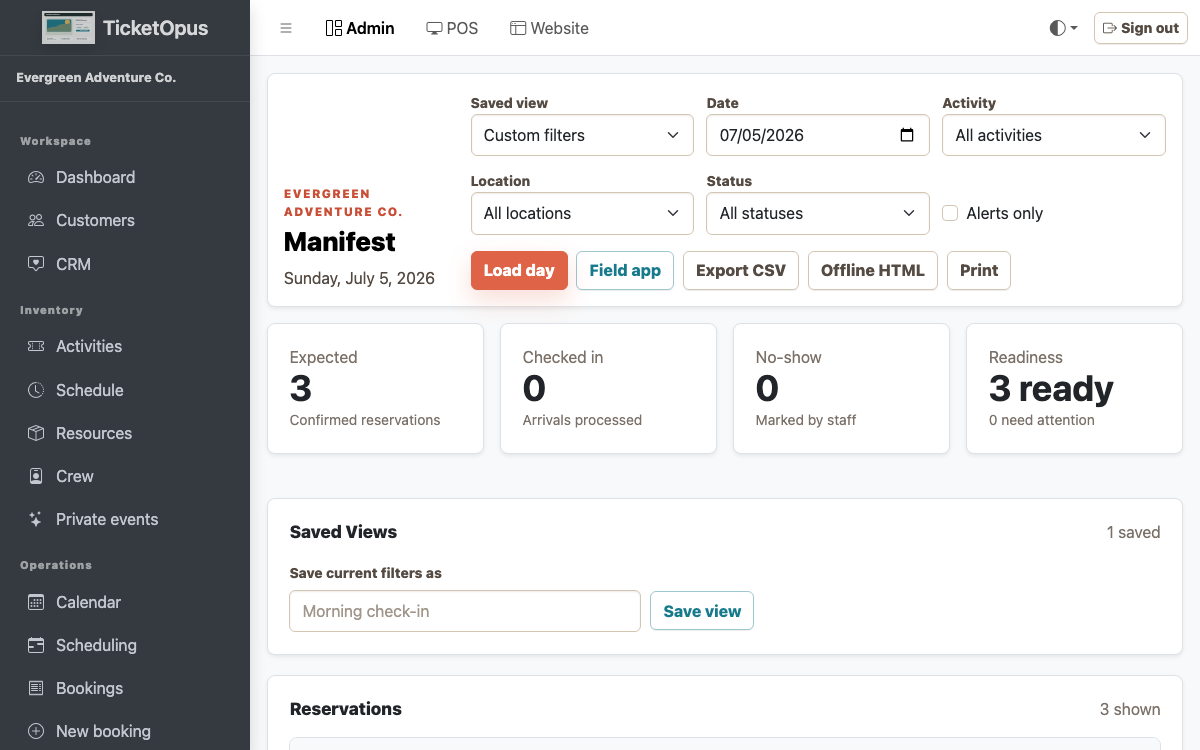
Calendar, manifest, and check-in
See arrivals, capacity, waivers, resources, crew, tickets, and exceptions before they slow the day down.
Explore workflow →
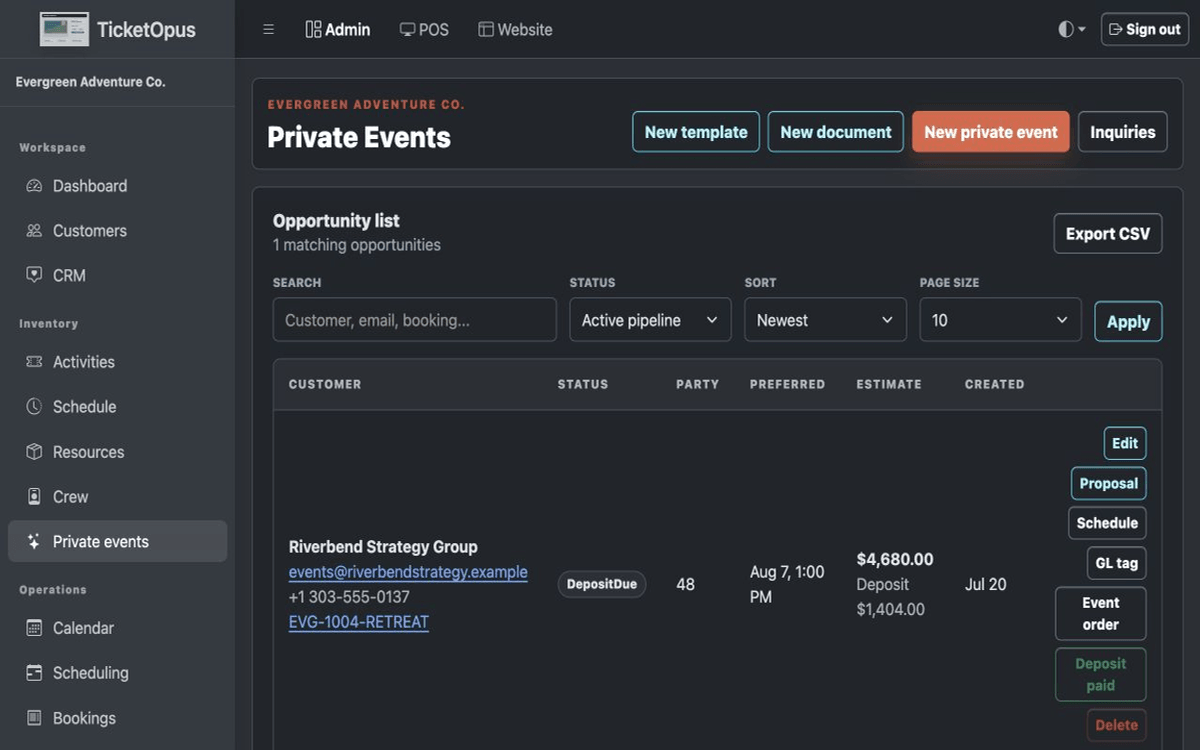
Private events from lead to handoff
Move inquiries into proposals, contracts, deposits, guest portals, event orders, and confirmed bookings.
Explore workflow →
Communication with booking context
Use profiles, consent, reviews, campaigns, recovery, self-service, and staff-aware AI in one history.
Explore workflow →
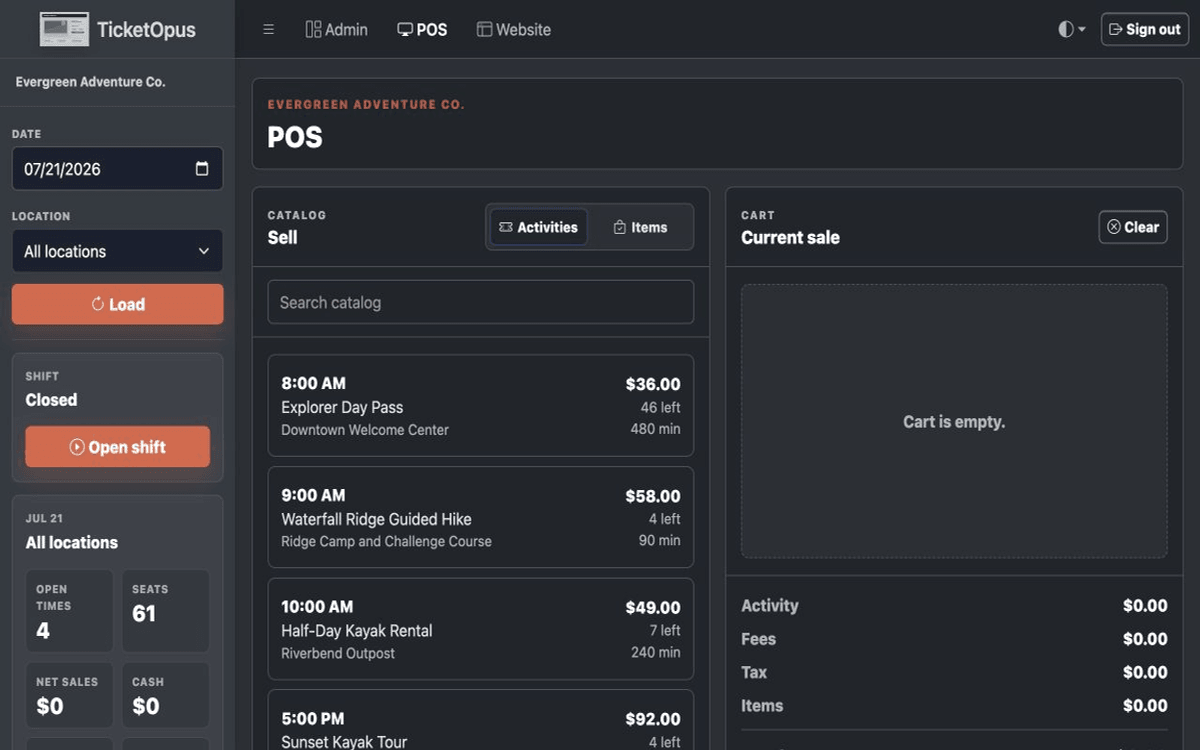
POS, kiosk, and mobile field work
Serve walk-ups, scan tickets, take payments, and keep mobile staff moving when the venue gets busy.
Explore workflow →
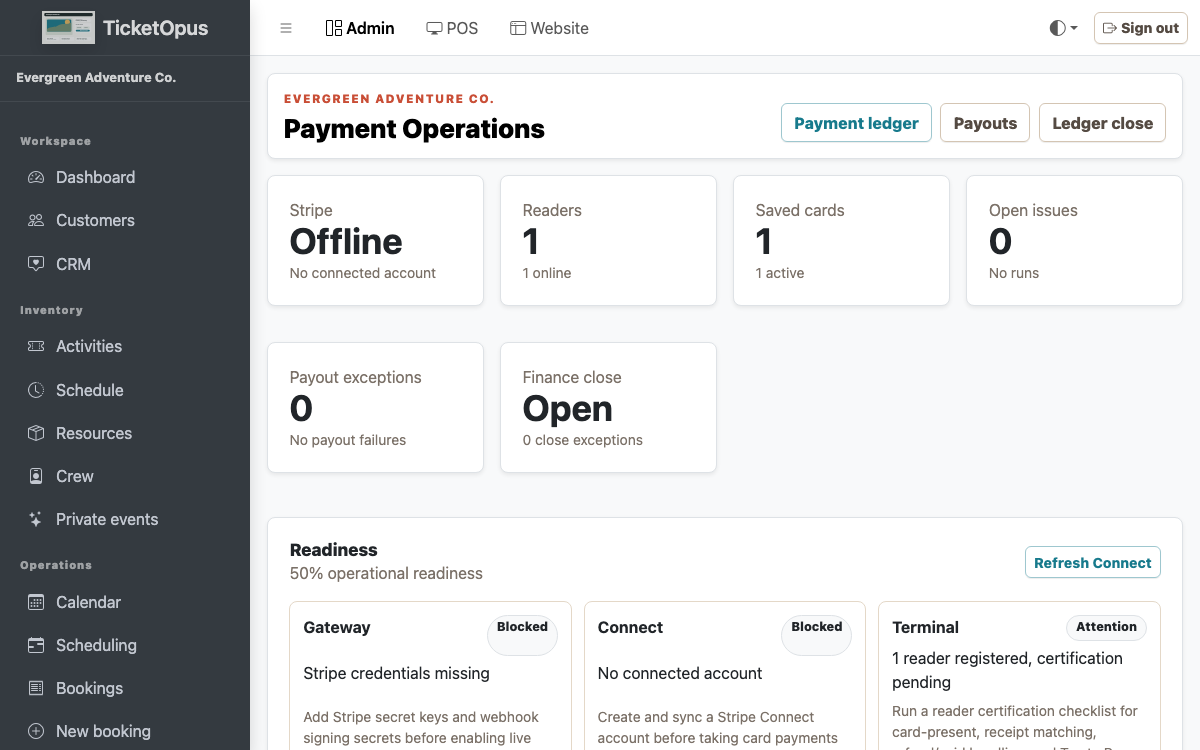
Payments, reporting, and distribution
Track transaction state, channel performance, provider readiness, exports, and financial follow-through.
Explore workflow →Private events belong in the operation
From “Are you available?” to signed, paid, and ready.
Capture the inquiry, shape the proposal, collect contracts and deposits, give the guest a portal, and hand operations a clear event order without losing the story in email.
- Inquiry and opportunity pipeline
- Proposals, contracts, and payment schedules
- Guest portal, event order, and sign-off
Built around real operating models
One platform. Different kinds of busy.
A studio semester, a timed-entry attraction, a kayak fleet, and a guided pickup route should not be forced into the same vocabulary or workflow.
Tour operators
Coordinate schedules, guides, pickups, manifests, waivers, direct sales, and partner channels.
↗ Timed entryAttractions and museums
Run ticketing, memberships, POS, kiosk, scanners, capacity, groups, and onsite guest flow.
↗ Inventory and timeRentals and charters
Protect equipment, vehicles, vessels, deposits, turns, assignments, and return workflows.
↗ Classes and creativityStudios and classes
Sell workshops, semesters, parties, memberships, gift cards, waivers, and repeat visits.
↗ Family registrationCamps and youth programs
Manage sessions, participant details, policies, payments, communication, and daily attendance.
↗ Higher-touch salesPrivate-event venues
Turn qualified interest into a signed, paid, and operationally ready event.
↗“Can we move our Saturday booking to Sunday afternoon?”
AI that knows when to hand off
Useful because it understands the booking. Trustworthy because the rules stay visible.
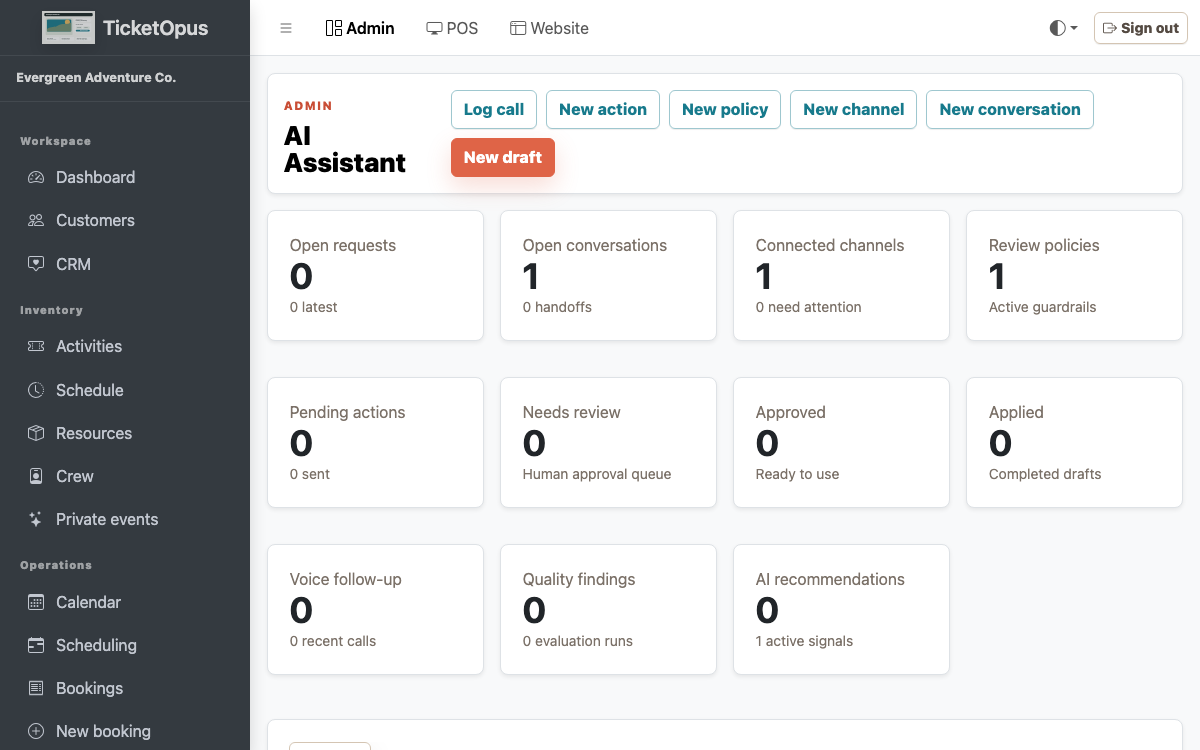
TicketOpus AI assistance can use catalog, policy, availability, guest, and conversation context while preserving confidence, approval, audit, and staff-handoff controls.
Explore guest communicationSwitch with evidence
Move the operation, not just the customer list.
A responsible migration accounts for future bookings, schedules, balances, integrations, domains, reporting, and the staff workflows that must work on day one.
Plan the migration- 01DiscoverSystems, data, workflows, owners
- 02MapRecords, rules, exceptions, integrations
- 03RehearseBooking, payment, operations, close
- 04LaunchCutover, evidence, support, review
A path for each stage
Start with what you need. Keep the platform connected.
Launch direct booking, grow into daily operations, or plan a multi-location rollout. Commercial terms are confirmed before implementation begins.
Direct booking foundation
Website or widget, catalog, availability, checkout, payments, guest records, and essential reporting.
Review launch path →Connected daily operation
Day-of workflows, resources, waivers, POS, private events, communication, reporting, and integrations.
Review operator path →Multi-location and enterprise
Governance, migration planning, advanced access, integration readiness, reliability evidence, and support.
Review scale path →Straight answers
Questions worth asking before you switch.
Every implementation should distinguish what works today, what requires provider activation, and what belongs in the launch plan.
Is TicketOpus only a booking widget?
No. TicketOpus connects the public website and checkout to scheduling, operations, guest records, payments, reporting, private events, and distribution. An embeddable booking path is available when an operator keeps an existing website.
Can we start with direct booking and add more later?
Yes. The recommended launch path starts with the workflow that creates the most friction, then adds connected modules without rebuilding the company record.
Which experience businesses fit TicketOpus?
TicketOpus is designed for tours, attractions, rentals, charters, studios, classes, camps, transportation, private events, and operators combining several of those models.
Does TicketOpus support migration from another platform?
The platform includes migration and validation foundations. A production switch should begin with an assessment of future bookings, catalog and schedules, customers, balances, integrations, domains, reporting, and launch-day staff workflows.
How does TicketOpus use AI?
AI assistance is tied to product and guest context, confidence, approval policy, audit records, and staff handoff. The goal is useful operational assistance, not unbounded autonomy.
Are all integrations live?
Provider-readiness and developer surfaces cover multiple integration areas, but a specific live provider should be verified as part of the launch plan before it is promised.