Security and trust
Operational trust should be visible, not implied
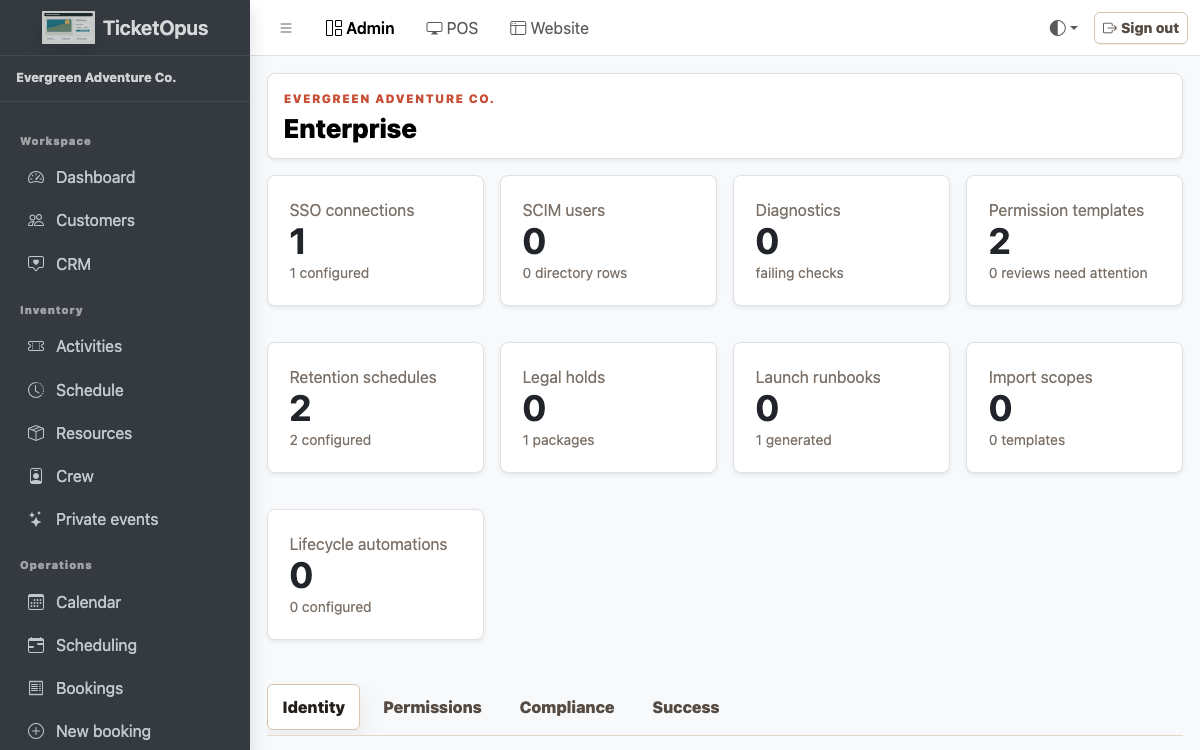
TicketOpus is designed around company boundaries, role-aware workflows, audit evidence, protected secrets, payment-safe records, and production-readiness controls.
Website → Checkout → Operations → Reporting
Company-aware by design
Business records are scoped to a company and sensitive workflows require explicit context.
The workflow stays connected to the booking context, company boundary, and operational result.
- Company query boundaries
- Role and permission controls
- Administrative and financial audit events
Protect the transactional core
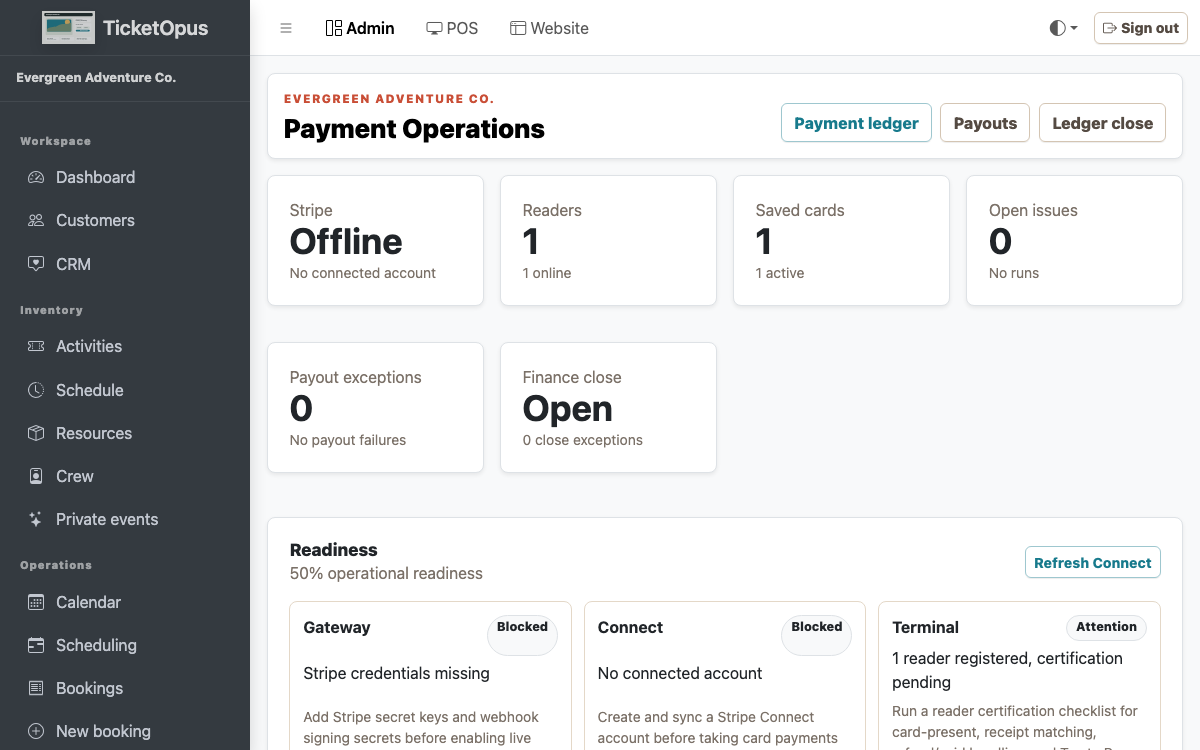
Bookings, holds, payments, gift cards, refunds, and outbound work use durable records and explicit state.
The workflow stays connected to the booking context, company boundary, and operational result.
- Short-lived capacity holds
- Internal payment ledger
- Outbox-driven delivery and retry
How the work moves
A controlled path from context to result.
Each step keeps responsibility, evidence, and the next action clear.
-
01
Launch step
Resolve company context
Start with the context that already exists.
-
02
Launch step
Authorize the action
Configure the rules and responsibility.
-
03
Launch step
Record the change
Run the workflow with the guest and team.
-
04
Launch step
Review the evidence
Review the result and improve the next cycle.
Questions before launch
Make the important boundaries explicit.
Can TicketOpus start with one workflow?
Yes. The platform is designed so an operator can begin with direct booking or another priority workflow and add connected capabilities as the operation matures.
Does TicketOpus support an existing website?
Yes. TicketOpus supports an embeddable booking path while also offering a booking-native hosted website and CMS direction.
How should we evaluate a migration?
Start with future bookings, catalog and schedules, customer records, payments and balances, integrations, domains, reporting, and the staff workflows that must work on launch day.
Are every provider and integration live today?
Integration pages distinguish implemented platform surfaces, provider-readiness controls, and future provider activation. A specific provider should be verified before it is included in a launch plan.