Distribution
Prepare partner channels without losing inventory control
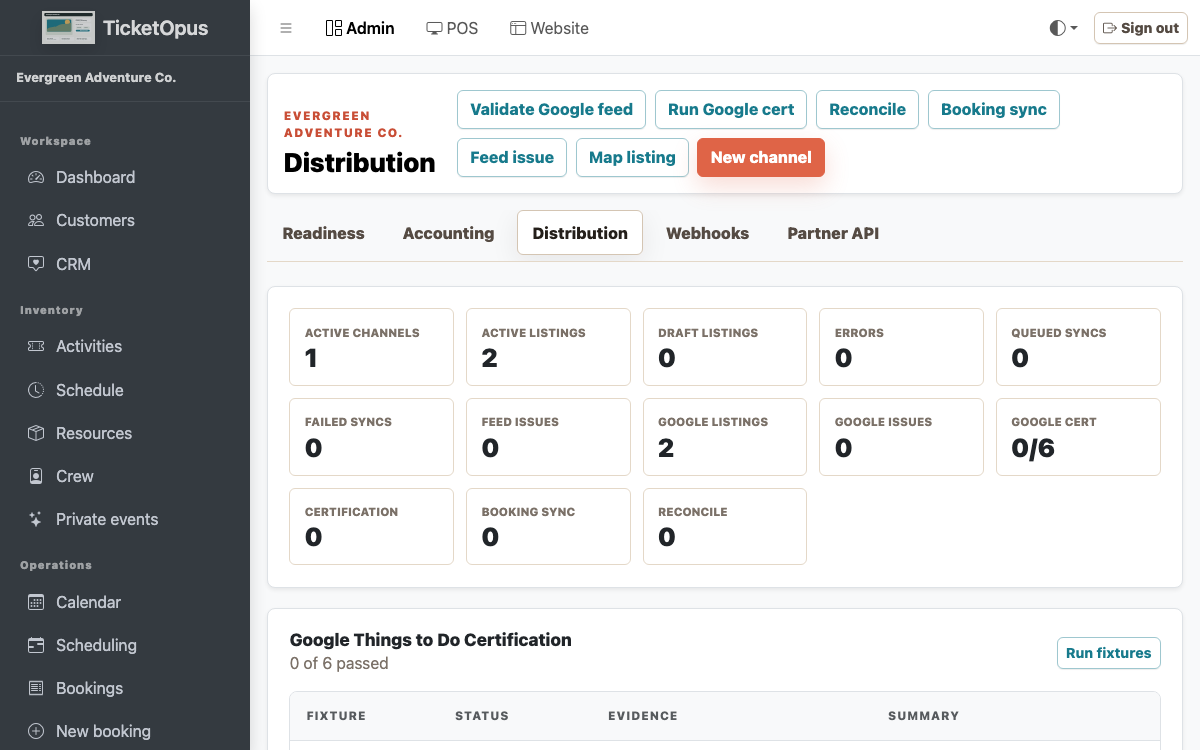
Run affiliate, External API, and webhook workflows while tracking channel rules, readiness, and attribution. Named OTA and Google Things to Do connections require provider activation and release verification.
Website → Checkout → Operations → Reporting
Control what each channel can sell
Map listings, allocation, pricing, commissions, and operational status with a clear owner.
The workflow stays connected to the booking context, company boundary, and operational result.
- Channel and listing records
- Allocation and commission rules
- Sync and readiness diagnostics
Give partners a governed path
Use APIs, webhooks, affiliate tracking, and request evidence without giving up traceability.
The workflow stays connected to the booking context, company boundary, and operational result.
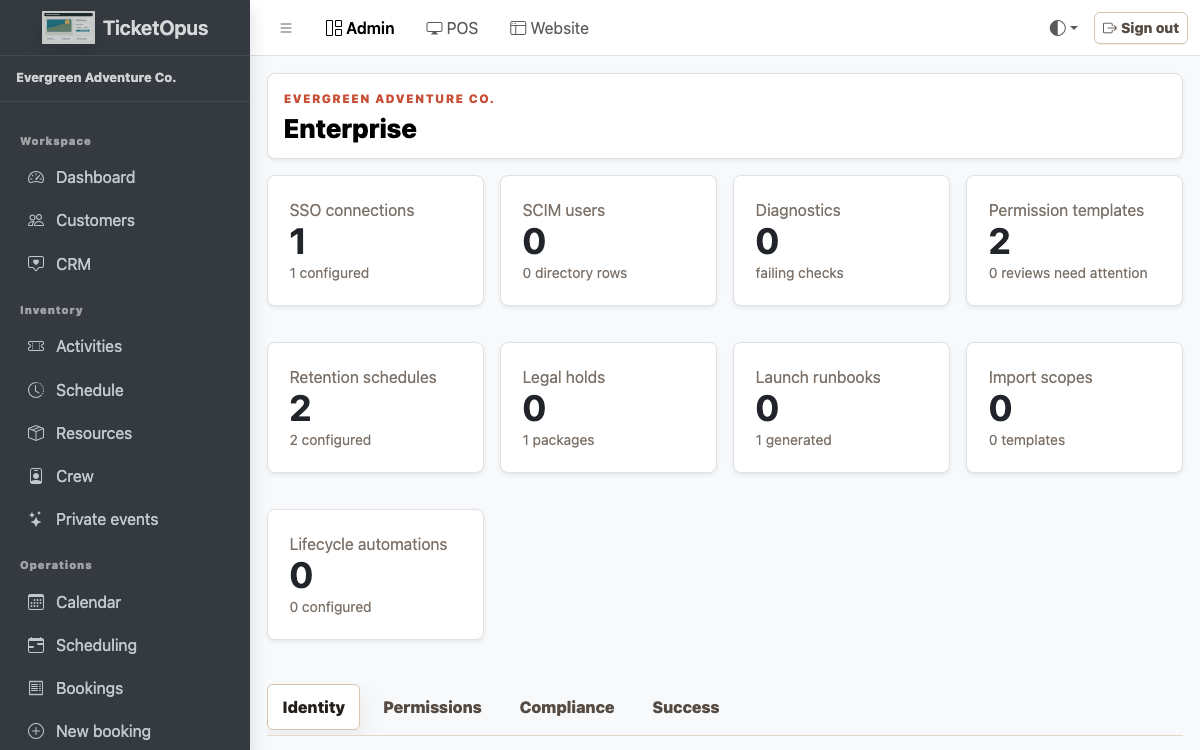
- External API and scopes
- Webhook subscriptions and retries
- Affiliate attribution and commission
How the work moves
A controlled path from context to result.
Each step keeps responsibility, evidence, and the next action clear.
-
01
Connected step
Choose the channel
Start with the context that already exists.
-
02
Connected step
Map the catalog
Configure the rules and responsibility.
-
03
Connected step
Set inventory rules
Run the workflow with the guest and team.
-
04
Connected step
Monitor health and attribution
Review the result and improve the next cycle.
Questions before launch
Make the important boundaries explicit.
Can TicketOpus start with one workflow?
Yes. The platform is designed so an operator can begin with direct booking or another priority workflow and add connected capabilities as the operation matures.
Does TicketOpus support an existing website?
Yes. TicketOpus supports an embeddable booking path while also offering a booking-native hosted website and CMS direction.
How should we evaluate a migration?
Start with future bookings, catalog and schedules, customer records, payments and balances, integrations, domains, reporting, and the staff workflows that must work on launch day.
Are every provider and integration live today?
Integration pages distinguish implemented platform surfaces, provider-readiness controls, and future provider activation. A specific provider should be verified before it is included in a launch plan.